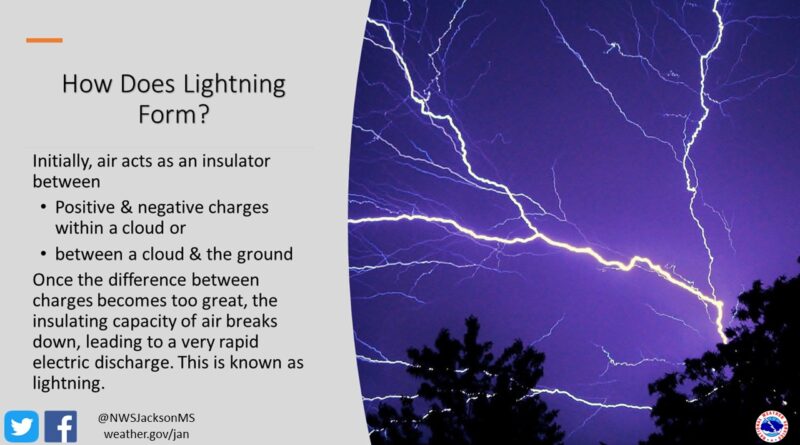
Lightning is a sudden electrostatic discharge that occurs during thunderstorms. It results from the buildup of electrical charges within a storm cloud and between the cloud and the ground, according to meteorologists.
The process begins as warm, moist air rises and creates turbulence within the cloud. This movement separates positive and negative charges, leading to an electrical imbalance. When the difference becomes large enough, a lightning bolt is triggered to neutralize the charge difference.
Lightning can strike the ground, objects, or even within a cloud itself. It can reach temperatures of up to 30,000 kelvins and is responsible for both natural light displays and damage during storms. Understanding how lightning forms helps improve safety measures during severe weather events, experts say.