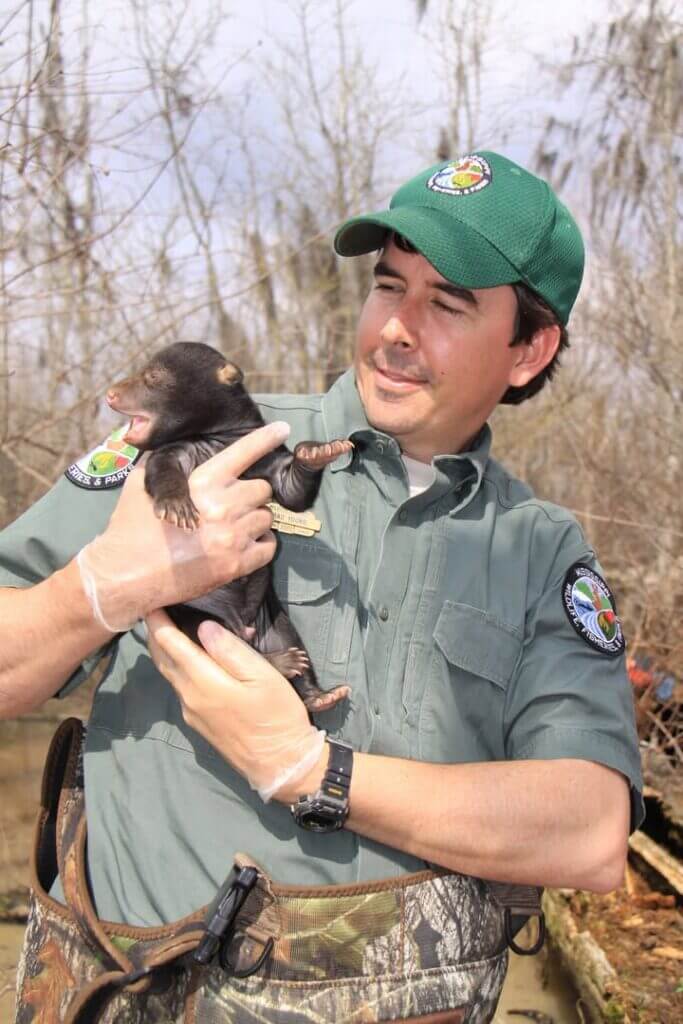
Mississippi’s Black Bear Population Bounces Back After Decades of Conservation
Black bears once played a significant role in Mississippi’s history, supporting Native American life, trade, and Delta hunting culture. By the early 20th century, they thrived in the state’s bottomland hardwood forests.
Overhunting and habitat loss led to a sharp decline, with numbers dropping to fewer than 12 by 1932, according to conservationists. Federal and state protections were enacted, including the Endangered Species Act in 1974 and state laws in 1992.
The Mississippi Museum of Natural Science established a black bear program in 2002 to research and monitor the species. At that time, only an estimated 20 to 40 bears remained in the state.
The program focused on tracking bears, studying their habitat use, and coordinating with neighboring states. These efforts, combined with natural expansion from surrounding populations, helped increase the population to about 100 to 120 bears within the first decade.
Nearly 20 years later, conservation efforts continue to support the species’ recovery. Long-term habitat stewardship and management have been key to the ongoing rebound of Mississippi’s black bears, officials say.
Follow Mississippi Department of Wildlife, Fisheries, and Parks for updates on Bear Week and other conservation news.
Source: Original Article